Saturday, September 29, 2018

Create an intelligent jacket that adapts to cold and heat

Leave a Comment

Create an intelligent jacket that adapts to cold and heat


Mercury is connected to Alexa to check the outside temperature


    Now that the Siberian polar wave is advancing in the Old Continent and threatens to leave Spain at six degrees below zero, technology is allied with citizens to overcome the last throes of winter. Ministry of Supply, a clothing firm based in Boston (United States), has manufactured a jacket that adapts to the temperature and protects its users.

Mercury is connected to the internet, controlled by an application, synchronized with Alexa, Amazon's intelligent assistant, and customizes its temperature through automatic learning.

The American jacket uses an accelerometer and temperature sensors to change the amount of heat it pumps according to the temperature of its surroundings in combination with user activity levels.

       The company, which has started, a crowdfunding campaign on Kickstarter where you can contribute from $ 295 to more than $ 2,500. "At the core of Mercury there are three carbon fiber heating elements that heat all at once, strategically located to disappear in the jacket With only 100 g, flexible and 1 mm thick, you will hardly notice the heaters, these heaters can deliver 10 watts of heating power almost instantaneously, reaching up to 57 ° C, "explains Ministry of Supply.

With an "Alexa turn on my jacket", Alexa gives the order to the Mercury heaters to start warming up the user. In addition, according to the company explains, just save the smartphone in your pocket you can charge the battery.
Read More

One in three Spaniards wants to pass the credit card

Leave a Comment

One in three Spaniards wants to pass the credit card


24% of the European population already pays for these devices


    One in three Spaniards wants to make contactless payments through their watch, wristband, keychain or other portable devices, according to the latest study prepared by Mastercard.

The report also reveals that, in Europe, 175 million people are interested in this form of payment, representing 24% of the total European population.

These figures are mainly due to the great acceptance that contactless cards have among consumers. According to the report, spending through contactless cards in 2017 increased 145% in the continent and 153% in Spain.

     Currently, 54% of Spaniards say they make a payment of these characteristics, at least once a week. 14% say they do it daily, 2% less than the European average.

The convenience and speed of this method of payment has fostered its great acceptance among the consumer and, in turn, this increase in its use has increased confidence and reduced the main reluctance that until now could be a barrier in its adoption.

Specifically, the fear of fraud in the case of contactless payments decreases considerably with respect to 2016: 15% less in Spain (a reduction of 10% in the European average).
Read More

In all the houses there will be a robot that takes care of us

Leave a Comment

«In all the houses there will be a robot that takes care of us»


International companies strive to show the most human face of these assistants who teach to program children, give company to the elderly or make video calls


     Lately, a recurring theme has been current every few years: robots will take away the work of humans in the near future. On many occasions you have an apocalyptic vision of them but the reality is that, at least today, they help society much more than harm it. In the framework of the Mobile World Congress (MWC) that takes place these days in Barcelona, ​​international companies have taken the opportunity to present their novelties in assistance robots that help humans.

Some take a step further and see a future full of humanoid robots to help us out at home. "All households will have a humanoid robot that takes care of us and helps us with domestic chores," Rosa Liu, senior accountant at IEI Group, said Monday. His company has launched AfoBot , a domestic computer connected to the Internet that measures the vital signs of users, allows video calls and control through it the rest of connected devices in the house.


      This robot has a screen that rotates 360º and is based on Android 6.0, so it is open to developers to expand the possibilities of the device with the integration of new 'apps'. At the moment, it is sold in the United States and China at a price of around $ 500. For the arrival to our country they are looking for distributors.

Another system presented was Robelf , oriented to family life especially for the care and companionship of the elderly and children. It is a robot with a more human form, which adapts to the height of the user and can sit and lift. It has a voice recognition system with noise cancellation, which allows you to communicate better with older people and young children.


     With this idea of ​​accompanying the children, Jibo has also been presented , the first social robot for the home of Everis and NTT Data, whose objective is to be integrated into the day-to-day lives of their owners. The application 'Be a Maker' (open-source) launched in Barcelona allows children to program real interactions with the robot. Jibo reacts through expressive responses and movements and has an advanced processing of natural language, voice technology and facial recognition. "Jibo can build relationships with the people he interacts with the most," Cynthia Breazeal, creator of the robot and professor at MIT, said in an interview.

It is, therefore, a social robot in which technology and entertainment come together. On its rounded shape, the creator explains that they wanted it to have a shape that children could recognize as a pet or a friend, but "that does not resemble a human being so that they clearly differentiate who is who".


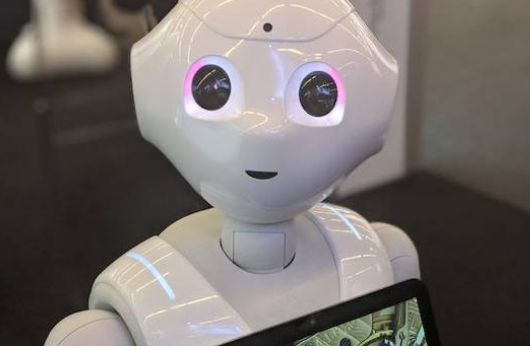
And in this world of robots that are friends of humans , Pepper , one of the most mediatic ones, could not miss . SoftBank, its creators, define it as a "proactive, attractive and interactive" assistant. It is designed for professional environments in which it is naturally integrated by its friendly forms. "Pepper offers a very good experience with the real world adding value to a location," they say from SoftBank.

     Other of its most outstanding characteristics are its "emotional empathy, its connectivity and the high degree of personalization", which allows hundreds of companies to incorporate it for very different uses. Among them is Nescafé and Carrefour, which have placed Pepper in some of their stores to help the customer decide on their purchases and give them information about products; airports such as Munich and hotels in the United States and Japan where complements the receptionists with tourist information to visitors.
Read More

The battle for the super online intensifies

Leave a Comment

The battle for the super online intensifies


The purchase of the fresh product online is the last link in the chain. Although success has resisted so far, users increasingly demand this service and supermarkets know that the last mile is in the fresh


    Convenience, time savings and a great capacity to control spending are the advantages that the purchase of online food provides to users. So much so that, according to the FoodISDIgital study conducted by Ipsos, we save more if we buy online.

Therefore, it is not surprising that e-commerce in this sector has grown in value by 24.5% in the first quarter of 2017, according to data from Kantar. The acceleration that the pure players have granted to the channel continues to have an effect, and this sales platform advances two tenths with respect to 2016 and already represents 1.2% of household spending on consumer products. In addition, according to this consultancy, the online channel can curb in the medium term this tendency to invest continuously in the physical store.

Not only in the super

When deciding on an establishment to make this purchase, the majority (77%) opts for the super and hypermarket websites themselves. But Amazon and Glovo are gaining more and more positions (especially among men).

But what exactly do we acquire when we buy home products online? Packaging (88% of consumers ask for it), beverages (82%), dairy (64%) and to a lesser extent bakery and confectionery (44%) are the main options, although the Ipsos report also ensures that perishable products like Fruit, vegetables, meat and fish are not so far from the usual shopping list. In fact, they reach percentages of 44% and 37% respectively.

«The online channel now represents 38% of food purchases, compared to 62% in person»

From Carrefour, Innova + is assured that seven out of ten customers include these products in their online purchases. "The company prepares the order the same day of the delivery and identifies the days of useful life to guarantee the maximum quality of the products, and also offers the customer the Freshness Guarantee plan, by which only the customer calls If you are not satisfied, you have a money back guarantee. " On the other hand, Diego Sebastián de Erice, e-commerce director Food DIA Spain, assures that although it is true that at first the fresh product did not enter the online orders, right now the proportion is identical to the physical purchase. "It is true that bulky or heavy products are the gateway to buying online, but sometimes the expert knows how to choose better than yourself the melon that is good.

The 60-40 ratio

The online channel copa and 38% of food purchases compared to 62% that is done in person. In the case of DIA they assure that, at the moment, the client is mixed: it combines the purchase in the physical store with the online store. "When he tries it a couple of times and sees that he has no problems, it's when he repeats and loyalizes," De Erice explains. But he does not believe that the retail disappears altogether, although he admits: "I do not see my children going to the supermarket as I have been".

Carrefour sources believe that "the key is to be able to respond to the needs of the consumer and Carrefour does with the development of its omnichannel, multi-format and multi-brand strategy, with which it is able to offer a consumer purchase option, independently where is this and the way of purchase you choose ".

«The logistics and transport of fresh products is one of the key points for the business»

The majority payment method, according to Ipsos, is the credit or debit card (87%) although the high use of systems such as Paypal (47%) leads to the conclusion that among the most experienced consumers this type of solution has many followers. A high percentage of users, 42%, consider that it is easier to control spending when buying online: without a doubt, the monitoring of the shopping cart has more effect than the mental sum while the commercial surface is covered.

In the guidelines that govern the moment of purchase, they overwhelm the computer (device chosen in 70% of transactions) and from home (94% of cases). The "heavy users" are those that exceed the average purchase by mobile (29% compared to 22% on average). The use of applications for these operations is already successful for a third of consumers.
Read More

This will be the purchase of the future

Leave a Comment

This will be the purchase of the future


Supermarkets without ATMs and smart speakers are the technology that will take care of the shopping list


     Hello Alexa. I want fourth half of ham. " This is the future of shopping in supermarkets, although that morning is not so far away and may be around the corner.

The virtual assistant Amazon is already prepared , at least in the United States, to order the purchase to supermarkets throughout the country and thanks to artificial intelligence with just review the shopping list, either Alexa or other attendees, may Go shopping.

In Spain, for the time being, we are getting used to mobile payment or contactless cards, but the bets of the great technology companies are already receiving biometric recognition .


     Using the fingerprint or the face are the next steps that are already being tested in different platforms and allow opening bank accounts in Spain. However, the next step has been Amazon with the presentation of the first supermarket in the world without boxes.

The Seattle company has taken a year to open its most disruptive bet, but citizens of New York County can already go through the 167 square meters of the first Amazon Go in the world.

     Zero boxes and zero ATMs , but in the future. Upon entering the store, the Amazon account is activated and becomes the virtual cart that will wander the aisles of the Seattle store. One of the culprits of the delay in the start-up of the establishment.

To fight against friends of the alien and guarantee their sales, Amazon has launched Just Walk Out technology. At the entrance of this supermarket of the future, users will have to pass a QR code, which is obtained through the Amazon Go application, by a reader located in the entrance lathes to the establishment.

With this action, the client is registered by the dozens of cameras located in the aisles of the store, it is the gateway to the new Big Brother of Amazon. According to Sam Machkovech, who has been able to buy at Amazon Go, and tells ArsTechnica: "Each camera is approximately 2.5 inches in size, incorporate a small LED light that indicated that they were on and focus on the products of the store" .

How do they charge the products?

Just by taking the product and putting it in the bag, Amazon's intelligent system includes it in the virtual basket and charges it. The test of fire is about to happen and check if the system designed by the team of Jeff Bezos works and there is still the question of whether Alexa in the future will be a cashier and will help Amazon Go customers to find a product.

Although Amazon has launched this store for the first time, a decade ago, IBM raised what would be the supermarket of tomorrow and the idea was very similar to that of Jeff Bezos.

The computer giant presented a video in which the products were equipped with RFID chips and thanks to a radiofrequency reader the payment was completed without removing the wallet from the pocket.

Now that future raised in 2006 is reality thanks to a small 'big brother' of 167 square meters installed in the US city of Seattle.


Read More

Smartphones and minors: more use, more exposure to risks, but less damage

Leave a Comment

Smartphones and minors: more use, more exposure to risks, but less damage


Children in Spain have their first mobile phone at 8 years old, when it was only 6 years ago when they accessed their first terminal


    Children in Spain have their first mobile at 8 years, when just 6 years ago it was not until 11 when they accessed their first terminal. Something that makes Spain exceed the European average. This is clear from the book 'Between selfies and whatsapps', which aims to be a current diagnosis on the safety of minors on the Internet.

Maialen Garmendia, one of the co-authors of the book, believes that there is also greater awareness of online risks. "If there is more use, it is evident that there is more exposure to risks, but the truth is that the percentage of those who suffer damage is less."

     A good example of this is that, although bullying is the most damaging risk, "face-to-face is more frequent than on-line, so we should not blame technology", says this expert.

The authors of the book, nevertheless, consider that, beyond the risks, the opportunities of the early access to the technologies must be analyzed and they have revealed some data about the carried out study.

     Thus, it is clear that for minors, their smartphone is something that allows them to be more connected, both with their friends (55%) and with their family (25%). In addition, one in four feels that they are safer when they carry their smartphone, which also allows them, at 19%, to organize their lives more easily. That is to say, that these technological tools have become "something fundamental for their social well-being" because "they develop their lives through technologies".

The report points out that, as far as penetration of smartphones is concerned, there is no socio-economic gap in our country. Something that does occur as far as access to computers is concerned. This worries the authors of the report, in the sense that these PCs could reduce the gap in technological skills.

     In addition, this report indicates that parents tend to monitor what their children do with the smartphone as well as with a mobile phone. That is to say, although technical supervision and control by gps can be done, the parents are at the crossroads of protecting their children and respecting their privacy. Therefore, they do not supervise everything they can out of respect for the privacy of their children.
Read More

Artificial intelligence is able to pre-empt medical diagnoses

Leave a Comment

Artificial intelligence is able to pre-empt medical diagnoses


The Alphabet project can predict when a patient will get worse


Alphabet, the parent company of Google, and the US Department of Veterans work hand-in-hand to take the technology to the patients' rooms to monitor and monitor possible changes in the health status of the elderly.

However, this union is not about electronic devices to monitor the heartbeat or to control blood pressure or tension, but both companies work on the deployment of DeepMind, the artificial intelligence of Alphabet.

According to several medical studies, one out of ten deaths in hospitals occurs after obviating any change in the patient's health status. The Alphabet project and the US administration will analyze patterns of 700,000 anonymous medical records to see if Artificial Intelligence from DeepMind can identify which patients will get worse during admission to the hospital and find out their future doctor

DeepMind and its engineers say that a possible use of the technology is to detect kidney failure in its early stages.

Kidney injuries commonly occur after routine procedures and operations, such as a hip replacement, and often appear suddenly without obvious warning signs. These injuries can be life-threatening, so DeepMind wants to find ways to detect them early in the hope of saving patients, they say.

This medical incursion of Alphabet and DeepMind is not the first. The 'intelligent' division of the search engine giant's matrix is ​​capable of diagnosing eye diseases and detecting pathologies with great precision.

The system relies on medical scanners and algorithms trained from retinal scans, and thus detect any problem more quickly and effectively. It is the first application of relevance in the field of health, and soon it could begin to be tested in clinical trials if it obtains the approval of the regulators.

According to Accenture, the advances in artificial intelligence applied to medicine could save up to 150,000 million dollars to the industry by the year 2026.
Read More

Vero, the social network that wants to face Facebook

Leave a Comment

Vero, the social network that wants to face Facebook


He arrives with novelty, but his birth occurred in 2015


      Facebook, Linkedin, Twitter, Snapchat, Instagram, Google+, Pinterest ... There are several names of social networks, which more or less, have monopolized interest among users. Now, there is a new player or, rather, a player, since it has a woman's name: Vero.

With three years of life, was born in 2015, has gained momentum in recent months after betting on a direct connection between its users, who can also segment their publication and reach a more consistent audience.

A feature, which also allows Facebook. In Vero, users can share a post with close friends, friends, known contacts or privately.

      Created by Ayman Hariri, son of the former president of Lebanon, maintains an interface very similar to the current ones. "The feed is made up of your publications and the publications of the people you are connected to or the people you are following, we do not protect, manipulate, insert advertising or retain publications, you will see what was shared and when it was shared. You will have to pay to increase your publication or reach your audience, "explains the company.

Vero has a timeline ordered chronologically with the latest contact updates. The idea of ​​this social network is that its users share all their tastes and hobbies with their virtual circle and allows the use of photographs, links, music, movies, books or places.

      The big difference with the current social networks is that Vero completely dispenses with advertising. The platform is based on the payment of an annual subscription as well as a percentage of the purchases made through the application. The application is available for iOS and Android devices.

"Our subscription model will allow us to keep Vero free of advertising, and focus only on offering the best social experience instead of trying to find new ways to monetize user behavior." Our subscription-based service makes our users our own customers, not the product that we sell to advertisers, "says the company.
Read More

The 5G will be ten times faster than the current network

Leave a Comment

The 5G will be ten times faster than the current network


Qualcomm's first tests show average navigation at 490 Mbps speed | Huawei presents the first commercial 5G modem


     There is still time for 5G to arrive. The most favorable estimates point to 2020 as the year of its implementation. However, in this Mobile World Congress (MWC) he is the protagonist. The companies gathered these days in Barcelona strive to get the looks of the media and customers with their advances in 5G.

This is the case of Qualcomm, the US chipsets manufacturer, which in the framework of this international event has carried out 5G simulation tests in which they have shown that the future of mobile internet will be extremely fast . It has replicated real world conditions (number of devices, geography or different user demands) in Frankfurt (Germany) and San Francisco (USA). In addition, the tests have been done thinking about the 5G networks that will exist at the beginning built on the existing 4G , not the ones that will arrive later in a truly independent way.


      Even with these premises, the results are amazing. In the German test, navigation increased from 56 Mbps for the average 4G user to over 490 Mbps with 5G , with a seven times faster response rate. In addition, the file download reaches 100 Mbps, a huge increase from the 8 Mbps 4G user. In terms of latency, it has been possible to go from 116 milliseconds (ms) to 17, figures much more similar to fiber optics .

But it goes beyond. The San Francisco simulation has shown more impressive speeds. Qualcomm modeled a network that has reached 1.4 Gbps of speed, that is, 23 times faster than the average of 4G in the American city that reached 71 Mbps. In addition, another of the conclusions of the study is that more than 90% of 5G users will be able to enjoy more than 100 Mbps.

     There is a great interest from different players in the mobile ecosystem to understand the real-world performance of 5G networks and devices," said Alex Holcman, Vice President of Engineering at Qualcomm Technologies. He stressed that the comprehensive study has been done to help this ecosystem to "prepare for the incursion into the world 5G" with the aim that application developers can begin to plan new experiences and services for users with 5G devices.

The first 5G modem

     But for this speed to make it possible, device manufacturers have to start thinking about 5G and the network companies go thinking about the infrastructure. The Chinese company that combines these two sectors is Huawei, which has presented at the MWC the first 5G commercial modem, Balong 5G01. Although there is still time for it to work in Spain, it comes with a 3FPP 5G chipset with a connection speed of up to 2.3 Gbps.

It is compatible with 5G in all frequency bands to offer a complete solution suitable for all kinds of uses. "The 5G technology will define the next leap towards a smarter world in which people, vehicles, houses and devices are fully connected, thus generating new experiences, knowledge and capabilities for all," said Richard Yu, CEO of Huawei Consumer Business Group, during the presentation.

The Chinese company that invests in 5G technology since 2009, has presented two modem models. The first, low frequency (sub6GHz), is small and light, compatible with 4G and 5G networks and has demonstrated downlink speeds of up to 2 Gbps, 20 times more than 100Mbps fiber. This provides an ultra-fast user experience, which allows you to enjoy video games in virtual reality or download a television program in just one second . On the other hand, the high frequency (mmWave) is available in indoor and outdoor units.

The first call 5G

Another of the recent projects in which Huawei has been involved, although this time under the union of Vodafone, is in the first call 5G in the world with the commercial standard NSA (Non Stand Alone). It was held last week between Castelldefells (Barcelona) and Madrid. The new standard contemplates the use, in a first phase, of the infrastructure of the 4G network for the control and management of traffic, so it will be necessary that both the terminals and the base stations can establish a dual connectivity to 4G networks and 5G at the same time.

It reaches speeds above 2 Gbps and latencies below 10 milliseconds. During the demonstration, the promoters of the call reminded that NSA will be "the only standard that commercial telephones will support in the short and medium term".
Read More

Cyber ​​attacks at home

Leave a Comment

Cyber ​​attacks at home


Cybercriminals can access alarms, televisions, smart bulbs or washing machines and take control of the home | The attacks by known viruses only represent 12% of the total


     All the appliances connected to the internet that we have at home can be hacked. Also the Smart TV or even the entrance door, if it is has a security code instead of the traditional key. All these devices IoT (Internet of Things) are connected to a 'Smart Hub' , the module placed in the home that manages them.

The problem analyzed by Kaspersky Labes that a cybercriminal can remotely access the server of these modules and download a file with the personal data of the user needed to access their accounts. "Could get to take control of their home systems," they say from the security company. And because these systems have a 'unifying' function, they are especially interesting for hackers because they can use them as an entry point.


       Although cybersecurity researchers have focused their attention on IoT devices in recent years, they are still proving that they are not entirely safe," said Vladimir Dashchenko, head of the vulnerability research group at Kaspersky Lab, during the conference. This Tuesday's press at the Mobile World Congress (MWC) in Barcelona, ​​who has ensured that even a smart light bulb "can commit us".

The company recommends users to always use complex passwords and change them regularly. In addition to these usual tips, Dashchenko has asked people to take an interest in cybersecurity issues by looking up the latest information on discovered and patched vulnerabilities in smart devices.


The most threatened Android

Threats at the computer level are increasing and the "cybercrime business" is increasing all over the world. Ricardo Maté, general director of Sophos Iberia, has been little optimistic, explaining in an interview to this newspaper that the best technical tools that only terrorists or governments had before, are now "within the reach of anyone in the 'deep web' " . In the same way, anybody - individual person or company - is exposed to being attacked.

Thus, it is no longer just the large multinationals that cybercriminals look at, but that the focus is more than ever on mobile phones. On all Android. A study by Sophos revealed that devices with this operating system detected more than 10 million threats in 2017, of which 77% were malignant. To avoid these cyber attacks, Maté recommends above all a task of "prevention" and always have the security copy ready, which in the end user is "so rare" that he does it.

Viruses are new

In addition, a Sophos study of 2,700 companies around the world has shown that attacks by known 'malware' only account for 12% of all attacks. "The new techniques of 'ransomware' or vulnerabilities to applications are 60%, so traditional antivirus solutions do not protect the user," says Maté. A worrisome problem because, in addition, it is a similar situation throughout the world, although in the United States and the United Kingdom they are "somewhat more advanced". Spain, although it is not a very cyber-ravaged country, receives a significant number that has increased greatly from 2016 to 2017.

Mobile devices are, therefore, the target of attacks of 'malware' that grows the most. This creates a "significant" threat to the security of companies because most employees have job information on their personal cell phones or laptops. Dan Schiappa, global head of Products at Sophos, says that one of his studios has discovered that attackers increasingly use Google Play to hide malicious applications such as crypto-software or unwanted advertising that "can cause a variety of problems for users." Android users. "

On the other hand, the computer security company ESET has presented at the MWC of Barcelona a study that states that 90% of televisions connected to an Android operating system are vulnerable. ESET says that although the benefits of the Internet of Things are "undoubted", these devices have "a dark side" related to the data they handle.

"We are seeing an increase in the number of attacks on Android devices, including those related to ransomware. As the number of connected devices in the market grows, the risk for companies and users is greater, "says Juraj Malcho, ESET's technology director
Read More

Autonomous cars? For now, only connected

Leave a Comment

Autonomous cars? For now, only connected


The automotive industry and technology companies must work together to explore solutions that allow the arrival of vehicles without a driver in a few years


     The technology fairs have hundreds of cars parked in their corridors for a few years. The automotive sector has not wanted to be left out of technological advances and some manufacturers now present proposals to champion the race for the 5G . This is one of the most important fields for the sector, since the arrival of this network is necessary for the proper functioning of future autonomous cars.

Thus, it is normal that technology companies and car manufacturers work together more than ever for the launch of electric vehicles, connected and autonomous. In the framework of the Mobile World Congress (MWC) of Barcelona, ​​both present their proposals for the real car of the future. And you do not have to go far to see it. The Spanish Seat has been working for several years on the "connectivity of our entire range of vehicles", according to an interview with this newspaper Leyre Olavarría, director of Connected Car at Seat.


      Younger customers are always connected to their phone and do not understand why when they get into the car they have to stop being," he says. Its objective is that its vehicles incorporate entertainment in the most natural and safe way possible . "It's not just for leisure, but with this service you get not to use your mobile phone while driving," he explains


The manufacturer, which since last September incorporates the interactive service by voice control Amazon Alexa, has just announced in Barcelona that it becomes the first in the world to incorporate Shazam , the song recognition service. The consultant Nielsen indicates that 70% of the users of Shazam use this application to more than 30 km / h, what supposes an important danger.

The president of the company, Luca de Meo, also highlighted the creation of X Moba , a new independent entity whose objective will be to "identify, test, commercialize and invest" in projects that promote solutions that improve the mobility of the future. Your first service is Justmoove, an application that allows you to reserve and pay parking or put gasoline from your mobile. Another initiative under the umbrella of X Moba is Respiro, a car-sharing company that, for the time being, will operate only in Madrid, although they want to export it to other cities outside of Spain.

For its part, Olavarría says that the company is testing with Telefónica for the integration of its vehicles in the 5G ecosystem. "We want to be prepared for when 5G arrives in Spain." It is curious that despite the commitment of many of its competitors for electric vehicles, the firm based in Barcelona does not have any model. On this, the director of Connected Car explains that they are conducting pilot tests with some of them to see the behavior of users, but that their current focus is natural gas "as the necessary energy transition to electrification," he says.

A mobile drives the car
On the side of the technology there have been great advances in this MWC. The Chinese Huawei has presented the first vehicle driven by a smartphone with Artificial Intelligence (AI). The 'RoadReader' project has transformed a Porsche Panamera into a vehicle without a driver that not only detects obstacles, but also understands the stimuli it receives around it and differentiates between more than 1,000 objects or animals . The tests were made with the Huawei Mate 10 Pro, a smartphone that includes AI in its processor.


The head of Huawei Consumer Product, Fabio Arena, explains to this newspaper that the AI ​​is integrated into the device with the Kirin 970 chip, which has a neural processing unit (NPU) that acts as its brain, so the car can "understand and know the dangerous objects of the road" to perform the necessary maneuver. "This learning capacity of Artificial Intelligence is unique."

On the other hand, the Korean operator SK Telecom has presented its connected, autonomous and 5G car project at the MWC of Barcelona . "The vehicle is connected with the user, with the other cars and with a control tower", explains Marta Silva. The vehicle is surrounded by cameras for a 360º vision that also send images to the control tower. "If an accident happens, the car in front can send the video to others to recalculate the route and do not form a traffic jam." The same thing could happen with traffic lights, the vehicle reads them at a distance and calculates the fastest route.

This 5G car, which demonstrated its operation on February 5 in a closed circuit tests in Korea, is not yet available due to the need for a 5G network that allows "much faster" data transmission between vehicles.


Read More

The 4G will reach the Moon

Leave a Comment

The 4G will reach the Moon


It will allow the future streaming of the return of the human being to the Earth's satellite


    PTScientist, Vodafone Germany, Audi and Space X work side by side to get back on the Moon, but, this time, with private financing. Mission to the Moon aims 2019 and Cape Canaveral to bring a Falcon 9 to the Earth satellite.

50 years after the man stepped on the moon for the first time, Vodafone and Nokia have proposed to take the 4G in 2019 to the satellite.

The 4G network will allow Audi lunar quattro rovers to communicate and transfer scientific data and HD video as they carefully approach and study NASA's Apollo 17 lunar exploration vehicle. This vehicle was used by the last astronauts who walked the Moon (Commander Eugene Cernan and Harrison Schmitt) to explore the Taurus-Littrow valley in December 1972.

    It is a crucial first step for the sustainable exploration of the solar system, so that humanity can leave its home on Earth, we must develop infrastructures beyond our planet," explains Robert Böhme, CEO and founder of PTScientists.

The Vodafone tests indicate that the base station should be able to emit 4G using the 1800 MHz frequency band and send the first live HD video broadcast from the surface of the Moon.

This broadcast will be broadcast to a global audience through a link in the deep space that interconnects with the PTScientists server at the Mission Control Center in Berlin.

    This project adopts a radically innovative approach in the development of mobile network infrastructure, and is an excellent example of an independent and multidisciplinary team that achieves a goal of enormous importance thanks to its courage, pioneering spirit and inventiveness", highlights Hannes Ametsreiter, CEO of Vodafone Germany

A 4G network offers high energy efficiency compared to analog radio and will play an essential role in Mission to the Moon. In addition, it will be the first step to establish a communications infrastructure for future missions.

Read More